
To Move or Build a Home Addition? That is the Question.
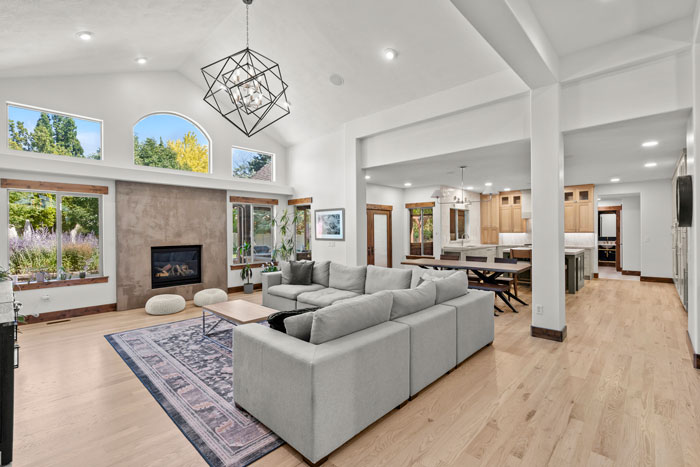
How to Decide What’s Best for Your Family
You need more space. The harder question is where to get it.
Most homeowners end up weighing two big options: move to a different house or add onto the one you already have.
Neither choice is automatically better; it all depends on your needs and situation. Here’s how to sort through the factors.
First: What Problem Are You Actually Trying to Solve?
Before you compare houses or addition costs, define what isn’t working.
“Not enough space” is a start, but it’s not specific enough to make such a big decision.
Do you need:
- Another bedroom?
- A larger kitchen and gathering space?
- A main-floor primary suite?
- Space for an aging parent?
- A home office?
- Another bathroom?
- Better storage?
- More privacy between family members?
- An entirely different floor plan?
Start with the problem. Then decide which construction—or moving—option actually solves it. You might find you can get what you need by remodeling the space you already have. If not, let’s dive into which type of new space is best for you.
Do You Still Like Where You Live?
This may be the biggest question on the list.
You can change a house. You can’t remodel its location.
Your neighborhood, schools, commute, yard, neighbors, view, mature trees, or proximity to family, those things deserve real weight in the decision.
If you don’t love your surroundings, that’s an easy answer— it’s time to move.
If all that would be hard to walk away from, adding to what you already love is the way to go.
Can Your Home and Lot Actually Support an Addition?
Before you become attached to the idea of a beautiful new family room or primary suite, find out whether it can actually be built.
Setbacks, easements, lot coverage, utility locations, zoning requirements, and the existing structure of the home are the biggest contingencies. Along the Wasatch Front, requirements also vary by city.
Then there’s the house itself.
A contractor may need to evaluate the foundation, rooflines, load-bearing walls, electrical service, plumbing, HVAC capacity, and how the new structure will connect to the old one. Adding square footage isn’t just a matter of framing three new walls onto the back of a house.
Before designing the addition, determine what your home and lot can realistically support. UHRE’s home addition process walks through the planning that happens before construction begins.
How Much Would a Home Addition Cost Compared to Moving?
In Utah, home additions typically run about $200 to $350+ per square foot, depending on the type of space, structural requirements, finishes, utility work, and complexity of the project.
In practice, most true additions fall somewhere in the six-figure range, with many larger projects reaching $150,000 to $300,000 or more.
That is a wide range because “addition” can mean very different things.
Adding a simple living area is not the same project as building a new primary suite with a bathroom, relocating plumbing, modifying the roof, and tying new HVAC into the existing system. We break down those variables in more detail in our guide to how much a home addition costs in Utah.
Before comparing numbers, make sure each estimate includes the entire picture.
Sometimes home additions receive a low initial bid when the major pieces of the project are still undecided. Scope, materials, allowances, structural work, permits, and trade sequencing all affect the final number.
Would Moving Actually Solve the Problem Better?
It’s easy to compare the cost of an addition with the listing price of another home and assume the cheaper number wins.
The real comparison is broader.
If you move, ask what you gain besides square footage.
Would the new house give you:
- A better neighborhood or commute?
- A larger lot?
- The bedroom count you need?
- A floor plan that already works?
- A main-floor bedroom or other long-term accessibility?
- Better parking or garage space?
- Features your current property could never reasonably provide?
If the answer is yes to several of those, moving may solve more problems at once.
On the other hand, if every home you look at creates a new list of compromises—and you keep comparing them to the neighborhood and property you already love—that tells you something too.
How Long Do You Plan to Stay?
A large addition makes more sense when it solves a long-term need.
If your family expects to remain in the home for many years, you’ll have time to use and enjoy the space you’re creating.
That matters.
If you already suspect you’ll move within a few years, however, a major addition deserves more scrutiny.
You don’t want to spend months solving a house you’re already halfway ready to leave.
When Does Building an Addition Usually Make Sense?
An addition is worth serious consideration when you can say most of the following:
- You like your neighborhood and want to stay.
- Your lot has room for the addition you need.
- The existing house is worth investing in.
- The addition solves a specific long-term problem.
- You can create the right space without forcing an awkward floor plan.
- The investment makes reasonable sense for the property and neighborhood.
- You’re comfortable living through the construction process.
The important part is that the project solves the real problem.
More square footage by itself isn’t the goal. Better-functioning square footage is.
Before You Decide, Compare Two Real Options
The best way to make this decision is not to compare an imaginary addition with an imaginary new house.
Get more specific.
For the addition, determine what space you actually need, whether your lot can support it, what changes the existing house will require, and a realistic planning range for the work.
For moving, look at homes you would genuinely consider buying—not a theoretical average. Pay attention to what you would gain and what you would give up.
Then compare the two versions of your family’s life.
Where do you want to wake up five or ten years from now?
Sometimes the answer is a different house.
Sometimes it’s the house you already love, with enough room for the life happening inside it.
Thinking About Adding Onto Your Utah Home?
Before you commit to plans or a budget, it helps to know what your existing home and lot can support.
At Utah Home Remodel Experts, we plan the project before construction begins—scope, selections, structural requirements, permits, trade sequencing, and cost—so you can make the decision with real information rather than guesses.
If you’re weighing an addition against moving, talk through your home addition with our team. We’ll help you understand what the project would actually require, including when staying and building may not be the right answer.
Explore by Topic:
- Basement Finishing (12)
- Basement Remodeling (6)
- Bathroom remodel (10)
- Home Addition (2)
- Home Maintenance (5)
- Home Remodel (32)
- Home Repairs (11)
- Kitchen Remodel (16)
- Painting (3)
See more posts:
What to Expect When Remodeling an Older Home
Remodeling an older home usually means more unknowns: wiring, plumbing, and framing that previous owners changed, and materials like lead…
Should You Remodel in Winter or Wait Until Spring?
It’s 28 degrees outside, there’s snow in the driveway, and you’re thinking about tearing apart your kitchen. Bad timing? Not…
It Takes 21 People to Remodel a Home. Do NOT Hire Them All Yourself
When most homeowners picture a remodel, they picture a contractor with a tool belt and a pickup truck. The reality?…
How Much Does a Home Addition Cost in Utah?
Updated for 2026 based on current Utah remodeling costs and recent project planning conversations along the Wasatch Front. A home…